I’ve known Eng. Mohamed Bahgat for a long time. He’s a relative, and we often meet at family gatherings.
Over time, I noticed that our fields of work are closely aligned. I was the Learning and Development Manager at Abo Dawood Group. I had access to a limited set of in-house programs and a small pool of trainers.
At the time, I wasn’t keen on exploring programs outside Abo Dawood or Procter & Gamble (P&G). There was a strong historical link between the two, and I had spent 17 years at P&G, mainly in development and administrative services.
After a few years, we successfully blended programs from both companies and built a new department within Abo Dawood Group.
The challenges
The challenges were significant.
We had a very small Learning and Development team.
There were clear cultural differences between the companies and entities within Abo Dawood Group, which operates in six different markets—Saudi Arabia, Bahrain, Iraq, Pakistan, Yemen, and Egypt.
Training across six countries is exhausting.
From my early experience in training at one of the largest distribution companies in the Middle East and Asia, I’ve seen how easily organizations can become bureaucratic or monotonous. This quickly erodes trust in training and talent development.
I noticed that employees viewed learning journeys in one of two ways: either as an open day or a punishment.
Some got excited just for the change of routine or workspace.
Others saw it as a waste of time.
That was hard for me to accept.
What the Active Deep Learner eXperience (ADLX) approach offered:
At one moment, everything changed when we were introduced to Active Deep Learner eXperience (ADLX) approach, especially the FIRST-ADLX framework.
The story began when the company contracted a training provider who designed and delivered the training using the ADLX approach. It was the first time we witnessed a truly active, deep learning journey, using what we initially thought were very simple tools. We didn’t realize then that this simplicity was built on deep, structured details. We discovered that later as we started building and embedding the approach into the organization’s culture, step by step.
When Eng. Bahgat spoke to me about ADLX and the FIRST-ADLX framework, I found the idea fascinating. We wanted to test it and apply it in real settings. With God’s grace and thanks to the trust that SeGa Group team placed in ADLX’s impact, we launched a pilot journey for the Learning and Development team in three countries. The results were very encouraging and impressive.
We experienced what a complete journey means—addressing the learner as a whole person: physically, mentally, emotionally, and spiritually. We learned deeply and trained seriously on facilitation and design skills, using ADLX as a core approach for creating and delivering learning experiences, and for training other trainers.
I still remember the first time one of us attended an ADLX-based training. He recorded a short video clip and shared it with us because we wouldn’t have believed that a two-day training could take place without using a single slide. Participants all agreed that the session was “extremely valuable” and shared detailed reflections and application ideas.
It became very clear how different this was from the usual boring training sessions. After that, we tried working with several providers who claimed to offer interactive learning experiences. But something was missing. They often included activities and games, and then… nothing. Feedback was limited to comments like “fun training” or “exciting day,” with no mention of real impact or what was learned or applied.
It became clear to us that what those sessions lacked was the essence of deep learning—connecting learners to their real-life contexts and lived experiences.
That’s when we realized that ADLX, especially through FIRST-ADLX framework, offers much more than games and learning activities. It’s about real transformation.
We, the Learning and Development team, came together and asked ourselves: Are we ready to take a leap of faith and commit to making our training experiences deeper and more impactful?
We needed to unify facilitation standards, grow our pool of facilitators, and adapt to the culture of each country we operated in. That’s when we developed the idea of building local internal teams in each country, who would operate across different markets and geographies, all aligned to ADLX facilitation standards. The idea was truly impressive to me.
Since I took on my role in Learning and Development, I didn’t hesitate to join ATD. Coming from a background in operations and sales, I have been focusing on learning and training since 2008. I gained a lot from ATD on talent development and eventually earned their international certification, becoming the first person to do so in the Middle East.
Still, despite all my experience and exposure to global training institutions, I was deeply impressed by what I discovered through the ADLX learning journey. It was completely different from what I had seen at international conferences. It brought great value and a real, measurable benefit to the learner.
Implementation phase
The main challenge was the existence of a massive library of training programs that the organization had purchased years ago, before the Learning and Development department was even established. Making use of this library was our first responsibility. The organization had high hopes for a return on investment from that content. This was one of the main reasons behind its focus on attending training sessions.
Deciding to reduce the use of the already-purchased materials was a major risk. In addition, the company worked with some of the largest consumer goods companies, such as P&G and PEPSICO, which had been offering training programs through very specific and long-established approaches, inherited through decades of corporate work.
The answer to the challenge came in the form of a question: “Aren’t we convinced that this is the right way forward?”
As I mentioned earlier, it was a leap of faith and a deep belief in the need for change. I believe that if we had paused to think through how exactly we would implement it and plan the next steps before leaping, we would never have reached where we are now. The transformation journey wasn’t easy, but it was full of learning.
ADLX approach and its underlying FIRST-ADLX framework were like a candle in the dark.
From the first moment I experienced the ADLX journey, I realized the root issue had always been the lack of “learner centrality” in the training process. There was no real attention to the learner’s full human experience. There was no intentional design for the different touchpoints the learner goes through.
Huge efforts and budgets were being spent on employee training, but the focus was always on the content, or on numbers—how many people attended, reports, checklists. Learners themselves were often the last thing anyone considered.
Another clear gap was how passive learners were during sessions. There was very little participation, and the training rarely led to any visible change during or after the sessions.
We began outlining the first steps of the transformation. SeGa Group team played a key role in keeping the process steady and logical, away from unrealistic enthusiasm or discouragement.
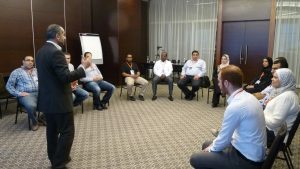
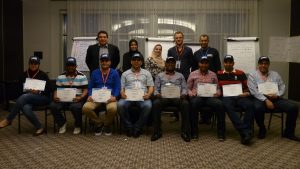
The first phase started with the Learning and Development team attending a four-day “Train the Trainer” journey based on the ADLX methodology using the FIRST-ADLX framework. We formed the core of the transformation inside the organization. Ten people from four different countries came together for four full days of deep learning and mindset shift.
I can confidently say this was the most powerful learning event I’ve ever attended in my 15-year career.
What helped most was the clear balance between mindset, skillset, and toolset. Every time a new concept was introduced, we immediately experienced it as learners, before we had time to ask, “How do we apply this?”
We kept switching roles—between learners, trainers, and learning designers—throughout the entire journey.
We started the implementation with four training programs we had already delivered hundreds of times before. We then redesigned these same programs, which were aligned with the organization’s competency framework, using the ADLX methodology.
This was far from easy. It’s always tempting to fall back into old habits—especially when using the same content library that had been purchased years ago.
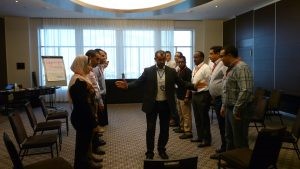
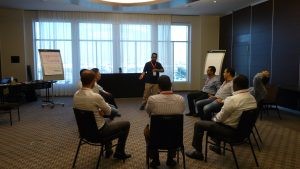
The first program we transformed was titled “Planning and Prioritization.”
I made many attempts to shift it from 215 PowerPoint slides into interactive activities focused on helping the learner achieve the training objectives.
I faced multiple challenges in turning this content into an Active, Deep Learner eXperience.
But during my very first session delivering the redesigned version, I was surprised to see the learners during the active review, they recalled all the points that were previously written on the slides, without ever seeing them.
One of the key points we had to explain to stakeholders and senior management was the significant drop in the number of training sessions during the first year of the transformation.
This drop was expected, as the focus shifted from maximizing training hours to delivering rich, meaningful, and performance-driven learning experiences.
During this period, reports moved from being just numbers to including quantitative data supported by learner feedback.
On another front, Abo Dawood Group faced a major challenge in the Operations department.
Any change in the process flow would cause disruptions across the entire operation.
Because of this, we spent a long time in meetings trying to convince the department leads that the new strategy—based on training local trainers in each country and using the ADLX methodology as the core approach for program facilitation—was more effective, more cost-efficient, and would lead to better impact.
The strategy relied on having local trainer teams always ready to deliver continuous learning to staff.
However, it was essential to carefully select the right trainers to invest in and make them part of this exciting journey.
We began searching for trainers who had the passion and willingness to apply this approach.
We set specific criteria for their selection, including asking them to record a video explaining why they wanted to be part of this experience.
We succeeded in selecting the right people for the Train-the-Trainer journeys based on the Active Deep Learner eXperience (ADLX) approach using the FIRST-ADLX framework.
We then began rolling out the successive phases of these journeys and expanding the methodology across different countries, from Egypt and Saudi Arabia to Pakistan and beyond.
At every stage, we paused to reflect on the strong belief in ADLX, its advantages, and the long-term impact it would have on both trainers and learners.
Today, we are proud to have 60 trainers who have completed the Train-the-Trainer journeys using FIRST-ADLX framework. They are now fully prepared to apply the methodology in their learning programs and have a deep understanding of its concept and structure.
We thank God for that.
The results
The results started to show by the second or third time we delivered the program using the new methodology.
While we were used to hearing plenty of morning excuses from participants explaining why they couldn’t attend, we began to notice a much higher level of commitment after word spread among employees that the training sessions were now different.
One key change we observed was the drop in dropouts. Previously, many participants would show up in the morning just to sign the attendance sheet, then disappear after the first coffee break, or spend the day stepping out to make dozens of phone calls. But with this new system, we were surprised to hear several participants say at the end of the day, “We didn’t feel the time pass.”
We also started seeing more and more stories of how people applied what they learned in their jobs. They began to feel the value of both themselves and what they were learning, as if the training was designed just for them. They saw how it could help them in both their personal and professional lives, and as a result, they made it their mission to prove to the Learning and Development team that their efforts were worth it and that the training had a real, practical impact.
One of the most meaningful moments for me was when I walked past a colleague and saw him planning his tasks using the exact method he had learned in a session weeks earlier.
Over time, the training culture in the organization began to shift. Instead of avoiding training, employees started walking into the session room with a smile, leaving their belongings by the door, seeing the chairs set up in open circles with no tables, and bringing a much higher level of positive energy.
The second phase of our transformation was preparing a larger number of employees to become internal facilitators for their teams and others in the company. This wasn’t our first time training internal trainers, but this time was completely different.
We moved from quantity to quality. Instead of repeatedly trying to use employees as trainers, we focused on identifying the most suitable ones and helped them qualify by attending the Train-the-Trainer journeys using the ADLX methodology and FIRST-ADLX framework.
These new facilitators played a key role in delivering technical training, including in areas like sales and logistics. Some of them also contributed to designing the programs as subject matter experts, and their knowledge of interactive learning made their ideas fully aligned with the structure and style of ADLX-based design.
We went through many phases of doubt, fear, and debate, arguing whether this new method would even work. But, by God’s grace, we managed to prove that when we committed to the standards of ADLX approach and FIRST-ADLX framework, the organization’s training culture shifted completely. What was once seen as mandatory training became a fully engaging learning process involving the L&D team, managers, and employees.
To be precise, in the first year, we conducted a full assessment of all our trainers and found that about 50–60% of them were fully applying the methodology in their learning journeys. The rest struggled due to workload pressure, and some were not yet fully convinced of the methodology.
In the second year, we launched a major motivation campaign called “Go for Gold.” We used gamification to encourage trainers to improve their performance and reach the gold level. Managers were also involved to ensure success. Every month, we celebrated top performers and achievements, including senior leadership, who supported the initiative. As a result, the number of trainers using ADLX increased, and Abo Dawood became one of the first organizations to adopt the methodology at scale.
We managed to influence many people across several countries. Today, we all work with the same mindset and methodology. Whenever someone attends an ADLX-based session, they can immediately recognize that the facilitator is using the same approach, even if they’re from different nationalities.
Some may wonder why the Learning and Development team at Abo Dawood adopted the methodology so quickly and with such passion. The answer lies in several factors:
– The team’s openness to the concept of talent development, which made them see the value of a methodology like ADLX in building and managing talent effectively.
– The positive outcomes they witnessed after applying ADLX in real contexts. There was a clear rise in engagement, energy, and positivity among participants, showing that the approach worked well and adapted fast, whether in Pakistan, Iraq, Turkey, or Saudi Arabia.
– The growing belief in the power and impact of the methodology. Participants with different experiences, roles, and cultural backgrounds saw firsthand how ADLX helps activate learners, deepen learning, and elevate the development process.
This made the learning impact on the L&D team clear, during and after the journey. They were deeply involved in implementation, measurement, and driving overall culture change in the organization.
Overall, the Learning and Development team at Abo Dawood found in the ADLX methodology—and its FIRST-ADLX framework—a comprehensive solution that fully met their expectations and needs. They used it to its fullest potential to grow talent and improve performance.
My experience with ADLX at Abo Dawood was a meaningful challenge. We had to design the core programs that future trainers and learners would use. These were developed by the central L&D team to ensure alignment with the ADLX methodology and its components.
The goal was to make these programs easy to deliver and implement. We designed them using ADLX to ensure they could be understood, applied, and sustained with real impact.
This journey—from selecting trainers to measuring impact—was inspiring and transformative. The ADLX methodology became real and actionable, not just theory on paper, thanks to the SEGA Group team’s activation efforts, clarity in showing how its components connect, and commitment to results.
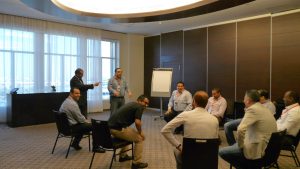
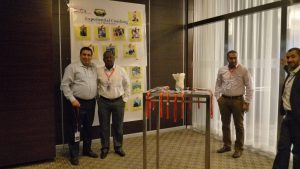

Mr. Bahaa Hussein – Learning and Development Director at Abo Dawood
With the support of Eng. Aya Medhat – Learning and Development Business Partner at Abo Dawood