 san al-Ja’eed is a retired Lebanese military officer with the rank of Captain, specializing in information technology. He possesses extensive experience in programming and teaching computer science and its applications. He previously served as a facilitator at the Military Academy and the Information Technology School of the Lebanese Army. Al-Ja’eed holds a technical proficiency certificate in administrative information technology, as well as a degree in Arabic language and Islamic studies.
In addition to his military and academic career, Al-Ja’eed currently serves as the director of an institute for memorizing the Quran and teaching Islamic sciences in Burj al-Shawbak, Mount Lebanon. He teaches the subject of the Prophet’s biography and is responsible for correcting Arabic language exam papers at the Military Academy, as well as promotion exams for military personnel.
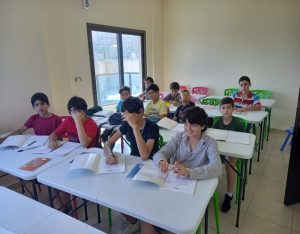
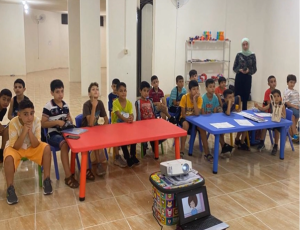
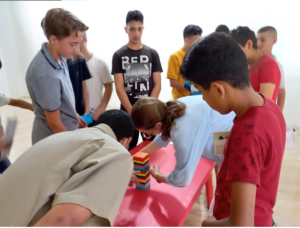
The institute he manages is a comprehensive educational platform that welcomes learners of various nationalities and ages. Its aim is to instill religious and moral values alongside academic education. The institute’s learners range in age from 9 to 13 years old, with a total of 35 learners divided into two classes.
Introduction to the Application Story: Why Spread Peace?
“Spreading Peace” is a personal journey I’ve experienced firsthand. I’ve witnessed its effectiveness, felt its impact, and reaped its positive results. I wanted to share this experience so others can understand the importance of following the Prophet’s teachings, as they bring great benefit to the individual and the surrounding community. Allow me to share this story with you:
A dispute arose between my late mother and some of our relatives—who were also our neighbors. This disagreement led to a years-long conflict. Whenever I passed by them, I would greet them, but they never returned my greeting. In fact, they wouldn’t even acknowledge my presence. Every time this happened, my friend who was with me would ask, “Why do you greet people who refuse to even look at you to see who’s passing by? Aren’t you tired of their indifference? They don’t care about you, so why would they get angry if you don’t greet them?”
I ignored his words and their coldness did not discourage or despair me. I continued this way for a period of time, until things started getting better. Some of them started to return my greeting with a glance or a murmur, until smiles returned to their faces and their responses to my greetings became more cheerful. The desired outcome had been achieved, and relations returned to their former state of friendship.
At that point, one of them confessed to me, saying, “I used to pity you and mock you. We would make fun of you in our gatherings, and I would often curse you. However, I was amazed by your persistence and refusal to give up. Eventually, this mockery turned into a session of self-reflection and a review of the reasons for the dispute. I found them to be trivial and not worth losing our relatives over. The hatred and resentment in my heart faded away, and we reconciled.”
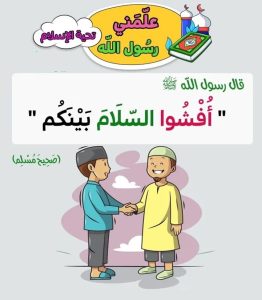
It was then that I realized why the Prophet ﷺ emphasized the importance of spreading peace, giving it freely, and offering it to those you know and those you don’t. It’s because it unites hearts. My desire to highlight the impact of spreading peace and its role in strengthening relationships and achieving unity among members of society led to the creation of this application story.
Learning Outcomes
Main Learning Outcomes: By the end of this journey, the learner will be able to:
Attitude Learning Outcomes:
- Appreciate the importance of spreading peaceful Greetings
- Appreciate the importance of following the Prophet’s Sunnah to foster harmony, love, and brotherhood.
- Appreciate the importance of good company.
Skills Learning Outcomes:
- Possess the skill of initiative and acceptance.
- Possess the skill of making good friends and adapting to their environment.
Knowledge Learning Outcomes:
- Recite the Prophet’s hadiths about spreading peace and explain the positive aspects of applying this Sunnah and its impact on building a cohesive society.
Parallel Learning Outcomes
In addition to the primary outcomes, I have designed a set of parallel attitude and skills learning outcomes:
Attitude Learning Outcomes:
- Feel the importance of humility in creating a suitable foundation for building strong relationships based on honesty.
- Recognize the importance of listening during communication.
Skills Learning Outcomes:
- Possess the ability to accept others’ mistakes and forgive them, as this removes heart diseases.
- Possess the skill of being patient in achieving their goals and not giving up at the first failure they face.
Performance Outcomes
- Work to gain more friends (at least five) in their neighborhood, class, school, and the mosque where they pray within a month of completing the journey.
If the main and parallel outcomes are the seeds we plant in the ground, then the performance outcomes are the fruits we harvest from this planting. These fruits do not appear and ripen immediately after planting, but rather require a period of time. During this period, they should be tended to and cared for, so we remove impurities from around them until we harvest delicious fruits. Therefore, if we want our effort, planning, and design for a comprehensive journey in all aspects and fields to go beyond the present stage and become a reality that the learner lives and accompanies in his life, we must cultivate and tend to it well. But before all that, we must prepare the land, study it, and take care of it, for a good choice of seeds is of no use without first knowing the nature of the land.
Defining the Implementation Story
My implementation story is more than just a learning journey; it’s a way of life aimed at winning hearts, removing hatred and resentments, and fostering love, affection, and closeness among people.
My implementation story is rooted in the Prophet’s hadiths that encourage brotherhood, unity, and strengthening relationships. It is a collection of asynchronous and synchronous activities that integrate the learner into their class and environment by considering emotional, skill-based, and cognitive aspects. It aims to prepare the learner to accept others, create channels of communication between them, and instill confidence and openness in learners towards their surroundings.
The most prominent feature of the learning sessions is breaking down the fear of others and working to gain new friends. Through this, learners learn how to be proactive and how to choose and gain friends wisely.
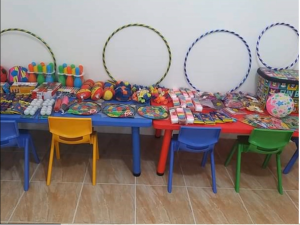
In this story, we share some of what we have done in designing and facilitating the journey as a lived experience derived from the principles of FIRST-ADLX Framework. This is done by activating its five domains and achieving balance and harmony among them to create a deep and active lived experience. We relied on activities that appeal to learners and leave a positive impression on them, stimulating enthusiasm and motivation, whether through cartoons, fun games, exciting competitions, or coloring sheets, in addition to visits and group meetings.
Let’s investigate this experience closely and learn about the most important activities they have undertaken, which we intended to be attractive, impactful, effective, and joyful.
Applying FIRST-ADLX Framework
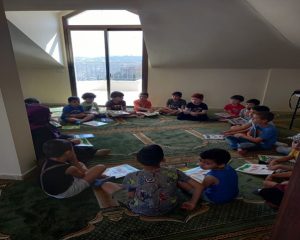
The learning journey was divided into four meetings, spread over four weeks, with one meeting per week, each lasting one hour. Throughout these meetings, I was keen on applying FIRSTedu-ADLX Framework in the design and facilitation:
- Focussing on the Learner:
- Active Learner Participation: I made the learner a primary partner in the learning process, ensuring they felt central to the journey. This was achieved by assigning them roles and providing them with different opportunities to lead some activities.
- Emotional Focus: Discussions about feelings played a prominent role. Since the meetings aimed at building friendships, it was essential to understand the desires, interests, needs, and perceptions of each group member regarding their ideal friend.
- Inclusive Activities: Given the goal of benefiting everyone, activities were chosen that involved all participants actively. No one was left out; participation was both effective and enjoyable.
- Personalized Approach: To break down barriers, I addressed each learner by their preferred names or nicknames to foster a sense of familiarity and inclusion.
- Open Dialogue: To encourage friendship building, there was ample opportunity for questions, expressing opinions, accepting diverse viewpoints, and speaking freely without restrictions.
Interacting within Positive Group Dynamics
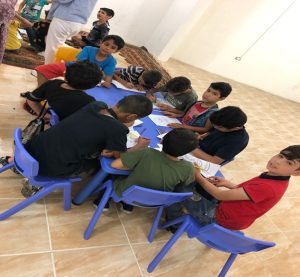
The domain of positive interaction played a significant role that was no less important than the previous domain. A group of friends form a community, and this is the goal of these meetings: to create a safe environment and foster positive interactions. Therefore, efforts were made to divide the learners into pairs and groups to exchange conversations, encourage each other, and adopt peer-to-peer positive feedback. Additionally, motivation, attention-grabbing techniques, and a cheerful atmosphere that prevailed throughout the meetings were effective factors in breaking the ice through jokes, using art through singing, varying activities with chants, encouraging learners, praising them, adopting cooperative learning, and engaging activities. All of these elements were given their special space.
Reviewing Activities within RAR Model
In my activities, I adhered to the RAR model in its three stages: Readiness Increase, Activity Facilitation, and Reviewing Actively, as you can see in the table that follows.
| General Guidelines | Learning Outcomes | ||||
| Activity Type | Cooperative Learning | Attitude Learning Outcomes | -feel the importance of having friends in his life.
-feel the importance of not being hasty in making judgments. |
||
| Activity Name | Building friendships before making judgments | ||||
| Number of Participants | 16 participant | Skills Learning Outcomes | – possess the skill of communication and listening.
– be skilled at choosing the right time to make judgments. |
||
| Material and Tools | Papers, Pens, Paper Slips with the participants’ names | ||||
| Layout | 8 Groups | Knowledge Learning Outcomes | -tell that appearances can be deceiving. | ||
| Context | Face to Face Learning | ||||
| Learner Status | Medium Energy Level | ||||
| Readiness Increase | Activity Facilitation | Reviewing Actively | |||
| The facilitator begins by asking about the obstacles that prevent them from building new friendships.
The participants are divided into pairs, with each participant choosing a paper that determines his/her group partner. Each participant writes down his/her impressions of their partner based on their appearance, on a paper they keep. The facilitator sets a time limit for the group activities. Each participant sits with his/her group partner, exchanging conversations and questions, and getting to know each other. |
· Time management
· Moving around
|
What have we done from the beginning of the activity until now?
How do you feel about the changes that have happened in your impressions? What steps will you take to make changes? Are you ready to make new friends today? What is the conclusion we have reached? |
|||

Sequencing within the Session Flow
This domain played a significant and active role in designing the learning journey. How could we maintain the learner’s focus, motivation, and enthusiasm, and ensure their engagement and immersion in all the stations of the journey (which lasted approximately one month) without considering the sequence and flow of activities and meetings? The activities proceeded smoothly and easily as an interconnected chain, and diversity in activities was adopted. Experiential activities (opening, energizing, linking and summarizing, closing) and learning activities (discussion, mini-presentation, cooperative activity, educational game, …) were designed to break the routine and boredom that learners might experience. I will share with you the sequence of activities in one of the meetings. As shown in the image below, it started with an opening activity, followed by a learning activity, an energizer, cooperative learning, then I added a linking and summarizing activity, before concluding with a closing activity.”
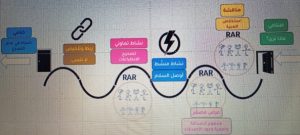
As for the time of each activity and its steps, it is shown in the following table.
| Description | Duration | Activity Name | Activity Type |
| · Each participant chooses a paper that determines their group partner.
· Each of them writes down their impressions of their partner’s personality on a paper and puts it in their pocket, specifying who they think would be a good companion. |
5 mins | What do you see? | Opener |
| · The facilitator mentions the story of the founders of Stanford University in America and draws a lesson. | 6 mins | Moral | Discussion |
| · The facilitator extracts the general meaning of the concept of friendship.
· The facilitator clarifies the truth about friendship, its status, its place, and its fruits. · The facilitator asks the learners to identify the qualities of a true friend. |
10 mins | The Importance of Friendship | Mini-Presentation |
| · The facilitator invites the learners to stand in a semi-circle.
· He/She determines the starting point and the ending point. · The facilitator at the starting point asks the learner next to them to clap their hands. · The claps continue in succession until they reach the end point. Then, the steps are repeated in reverse (from the end point to the starting point). |
4 mins | Send Greetings | Energizer |
| · Each learner sits with their partner, asks each other questions, and gets to know one another.
· Each learner compares the qualities they wrote down at the beginning of the session with the qualities they noticed in their partner after talking. · Each learner identifies what they would like to change in their partner’s personality to strengthen their friendship. The facilitator brings the perspectives together and shows the extent of overlap and the possibility of a strong friendship between them. |
26 mins | Correct Your Impressions | Cooperative Learning |
| · The facilitator presents some situations that happened between friends, while the learners decide if they fall under the category of friendship or not. | 4 mins | Don’t Forget | Linking and Summarizing |
| · Learners express their feelings towards the actions of the Stanford University president based on their clothing.
The impact of hasty judgments on achieving benefits and building friendships is drawn. |
5 mins | Haste is Waste | Closure |
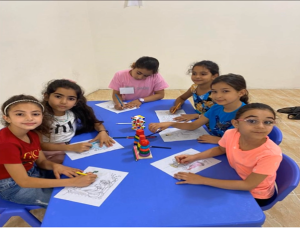
Learners were also asked to complete some activities outside of class, such as greeting everyone they met on the way or getting to know someone new they prayed with at the mosque, and observing the impact of this behavior. During the meetings, they shared news, talked about their experiences, especially the funny incidents they encountered during this journey. The opening activities contributed to activating the learners, increasing their readiness, and paving the way for them to know the topic of the meeting. The energizers were a reason for spreading an atmosphere of fun and joy and recharging energies. As a linking and summarizing activity, we would color the appropriate picture for the previous meeting’s topic and recall what we learned in each meeting. We always worked on making the educational meeting more enjoyable and engaging, where participants maintain their focus, attention, and interaction with others, thus preventing boredom and not feeling the passage of time, and eagerly awaiting the next meeting.

Transforming Learning into Peformance
This journey was based on applying learning in real life. It aims to create a connection between the learner and their surroundings, developing their abilities and knowledge, so they can better cultivate the seeds they have planted. Before each meeting, learners would perform a task in the real world, during which they would record their observations. During the meeting, learners would discuss this experience, identifying their strengths and weaknesses, and exploring appropriate ways to improve to achieve the desired outcome. Consequently, they would repeat the task after the meeting in an improved form. During the meetings, a suitable environment was created (e.g., introductory videos, educational cards, etc.) to contribute to developing learners’ abilities and knowledge, stimulating their curiosity and interest, and moving them away from negativity and apathy. The skills that could be acquired during the learning session were clarified, as well as how to use them in daily life and their impact on self-development and a sense of responsibility.
The Impact of Applying FIRST-ADLX Framework
On the Facilitator:
The transition from being a teacher to a facilitator requires a unique effort and a complete change in style and approach. It shifts the focus from the teaching process and content to the learner, who is at the center of the process. I have tried as much as possible to change the approach I try to apply in my relationship with my students by implementing the domains and concepts we experienced in the journeys of FIRST.
After this experience, I believe that more effort is still needed, as we are still at the beginning of the implementation journey. I hope that we will succeed in the end in developing our performance to suit the best interests of the learner. I still have a lot to do, as these learning methods contradict what we have experienced for many years in the classroom. Changing the traditional image of the teacher as the center of the educational process requires more time. Before, during, and after each meeting, concepts and methods change, some areas improve, and others are added.
Becoming a facilitator is not easy, and the presence of a third party is important to monitor and assist in evaluation and accelerate the progress. Sometimes what we think is progress is actually a setback, and what we see as positive may be negative. If only we all had the ability to see our flaws and mistakes correctly, we would succeed in everything we do. We may evaluate ourselves correctly, and we may exaggerate sometimes, and the discussion of these points is lengthy, and God is the guide.
If you are not affected, you will not be influential, and if you do not change, you will not be able to make a change. This is how my perspective has changed, my concepts and beliefs have changed, and I have acquired many skills and gained a lot of experience. I feel that I am able to make a difference and leave a mark. What we experienced as learners planted in us a strong desire to transfer it to other learners, so that they feel the importance of learning in their lives and its impact on their future. I no longer focus on the educational material as the main axis of the process, but rather on adapting it to suit the learners’ conditions, knowledge, and backgrounds, because they are the foundation on which we must build, and the land that we should take good care of and plant with what suits its nature to produce the best fruits. Therefore, I am no longer just a lecturer, pushing information, pressing it, and stuffing the learner’s mind with it, but rather I have become a facilitator who balances pushing and pulling, and helps learners to engage in the learning process by involving them in decision-making, playing the role of facilitators, and supporting and encouraging them to participate actively, by focusing on designing a living experience whose impact extends and accompanies the learner in their life and reality. This is by considering each meeting as a trip in itself, which must be prepared for and the appropriate atmosphere created. It is not just an activity, but a journey that learners travel through, live in, and benefit from, by designing activities that touch on the individual interests of each learner and aim to help him discover his energies and invest his abilities.
On the Learners:
The learners experienced a new style during the journey, one they had not encountered before, neither in their schools nor in their mosques. They had grown tired of the boredom and disorientation that afflicts the recipients of dry sciences and other sciences, where they felt like mere vessels into which information is poured. Instead, they became active participants in the learning process, and every learning session became a new adventure that they eagerly awaited, after having been unable to bear starting
 it. Salim al-Hajj, twelve years old, says: “I used to feel like I was going to prison whenever my parents enrolled me in a summer course, but these meetings had a different flavor, they attracted us and captivated us, so much so that we did not even want the meeting to end.” And Rim al-Shamaa says: “I never imagined myself standing, holding a microphone in my hand and speaking to a group of people. I gained courage.” And Ahmed Yassin comments, saying: “What happened to us, and why can’t education be this way, if only we loved school and lessons.” And Yahya al-Matrab says: “We were not used to calling the teacher by name, or to them sharing our games, feelings, and
 thoughts. I really felt like a human being, and that I have an identity.”
The application of FIRSTedu-ADLX framework on the learners was met with positive feedback. The learners realized that the problem was not with them, but rather with the method used to convey information to them. They realized that this framework can be easily adopted, transforming the learning process from a painful journey, in which the learner is marginalized and a secondary element, to a fun journey where the learner is the main focus and the important element. The participants wished to adopt this framework as an alternative to the current curriculum, due to its positive results, which make learning enjoyable and the teacher a person who understands the needs of the learners, knows their interests, and highlights the development of their abilities. There is no annoyance of what is unbearable, no punishment for failure to perform tasks, and no cruelty at every stumble, but rather guidance that directs their steps and nurtures them on their learning journey, and extends a helping hand rather than a stick of blame, and is the lamp that illuminates the path ahead of them, and is not a background that hides their path in its shadow.
On the School or Community:
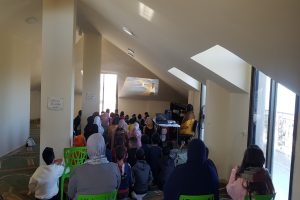
The framework was applied in an institute for memorizing the Quran and teaching Islamic sciences. The impact we noticed was an increase in attendance at various meetings, with everyone wanting to experience what they heard about from their friends’ experiences. They would leave asking about the date of the next meeting. Parents also noticed their children’s attachment to attending the meetings, preparing early before the scheduled time, and being eager to come to the institute. One mother said: “I used to find it difficult to wake up my children and convince them to attend such courses, especially since they are on a school holiday, when children are eager to sleep and play. But the situation changed, and I started asking them to stay up a little later, so they would not wake up less than two hours before the scheduled time.
Conclusion
In conclusion, …
I would like to express my sincere gratitude to those who organized this journey, the facilitators, supervisors, designers, and staff, for your dedication, sincerity, and genuine contributions.
To those who aspire to make an impact: If you want to leave a lasting and profound impact, build bridges of communication with learners, and make meetings full of energy, vitality, and interaction, the path ahead is paved and smooth, the way is easy and simple, and the solution is in your hands. Let go of the teacher’s hat and put on the facilitator’s hat. Have I piqued your curiosity? Yes, the change is in your hands. The important thing is to have the desire for it. Join the learning journeys with the First Academy to experience an in-depth and active learner experience. Live the experience we lived and realize its importance, effectiveness, and ability to make a fundamental change in your style, helping you succeed in achieving the desired goals of the learning process, and opening up a space for creativity and planting the seeds of interaction and integration among learners, and a seamless sequence between different activities that motivate learners and remove obstacles that hinder the learning process, so that concepts are firmly rooted in their minds, and the learning material becomes beneficial, and learning is transformed into a tangible, real-world performance that they benefit from in their present and future.