About the Facilitator
I am Nazek Soubra from Beirut, Lebanon. I have a Master’s degree in Administration, a Teaching Diploma, a Bachelor’s degree in Biochemistry, and several certificates in various fields. I have experience in teaching Islamic and Sharia studies, mathematics, science, biology, chemistry, and physics. I also possess diverse experience in coordination and administration within schools and other institutions.
Introduction to the Impact Story
The story we will share together is about the implementation of FIRST-ADLX Framework in a summer course in Lebanon that targeted boys and girls aged between 13 and 16, with a total of 20 participating students.
After experiencing the domains and principles of the framework, I applied the framework in several subjects I facilitated during the summer course. However, in this story, I will share only one: the story of facilitating “Home Medicinal Herbs” within the science subject. I set my intention and designed my journey, keeping a higher goal in mind: The IMPACT. I wanted to influence my students in terms of Da’wah (invitation to Islam), education, skills, science, and medicine through the design and facilitation of an Active Deep Learner eXperience using FIRST -ADLX Framework.
Learning Outcomes
I designed different types of learning outcomes (main, parallel, and performance outcomes), and I arranged them, starting with the attitude outcomes. In this paper, I will share only the most important ones with you:
At the end of the journey, the learner will be able to:
Attitude Outcomes:
- Recognize the importance of healthy habits inherited from our ancestors and connect modern science to them.
- Recognize the importance of Prophetic medicine, the importance of researching it, and the importance of applying it.
Skill Outcomes:
- Prepare the specific herbal mixture for each health condition according to their training.
Knowledge Outcomes:
- List the properties and benefits of some common home herbs available in most households.
Application Story and Activities
Despite not having any prior information about the students, I considered the common characteristics of boys and girls aged between 13 and 16 living in the environment they belong to (which is the environment I belong to as well) and designed a learning journey consisting of one session/ five activities: a pre-opening activity, an opening activity, 2 learning activities, linking and summarizing, and a closing activity.
1- Pre-Opening Activity: (5 minutes)
The learners arrived 10 minutes before the session, so I invited them to choose between two games:
- The learners divide into two groups and compete to pass a hoop from the first person to the last while holding hands. The group that gets the hoop through first wins.
- The learners divide into two groups and throw a ball to each other, ensuring it doesn’t touch the ground for one minute. Whoever doesn’t drop the ball wins.
2- Opening Activity: (5 minutes)
- The learners divide into two groups. One student from each group volunteers, and we blindfold them. They have one minute to identify the type of plant in front of them using their other senses. (The set of plants I used was: tea – chamomile – rosemary – sage – thyme).
- The game is repeated with new volunteers and another set of plants (ginger – eucalyptus – bay leaf – cinnamon – onion). I would ask the students about their feelings and which sense they relied on to identify the type of plant.
3- Learning Activity 1 (RAR: Explore and Report): (15 minutes)
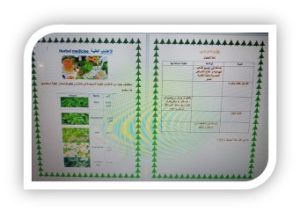
- The learners divide into two groups that move between several stations. At each station, they must research a specific herb, extract its properties, determine how to use it, and the illnesses it is used to treat, collaboratively documenting this information in a prepared report. Among the displayed plants, there is one mentioned in a Prophetic Hadith or a Quranic verse, and the learners must identify it and mention the Hadith or verse if they know it. The activity includes 10 stations, each containing one or more pieces of information, divided into three main sections: information about the herb, how to use it, and its uses.
- To achieve Readiness Increase: The facilitator fully clarified the tasks and conducted a mini-trial of the activity with the assistant teacher and a student volunteer to distribute tasks and explain the mechanism for searching for the “treasure” (information) and documenting it.
- During the Activity Facilitation phase: The facilitator monitored the students’ progress as they performed the activity, provided them with the necessary encouragement, and worked to spread a positive and effective atmosphere.
- In the Reviewing Actively phase: The facilitator invited the learners to share their feelings and experiences during the activity and to mention one thing they learned. In this phase, the facilitator elicited the students’ existing knowledge about plants used in treatment and plants mentioned in the Prophetic Hadith or the Holy Quran, in addition to what they learned about Prophetic medicine. Then, they were invited to share the name of one herb they intend to try in the future, stating the reason behind their choice.
4- Linking and Summarizing Activity: (5 minutes)
- The learners were invited to summarize what they discovered and add any other information they wished to share, then prepare these contributions in the form of drawings to present to others.
- While the learners were presenting their drawings, the facilitator encouraged them, praised their contributions, and repeated the important points they mentioned to reinforce understanding.
5- Learning Activity 2 (RAR: Explore and Apply): (10 minutes)
- In the Readiness Increase phase: The learners’ energy and enthusiasm were raised, they were provided with instructions and their understanding was confirmed, and then the tools were distributed: various herbs, paper cups, a small pot (rakwa), honey, a spoon, and a strainer.
- The facilitator had previously prepared a box containing 5 papers, each bearing the name of a specific disease or symptom.
- During the Activity Facilitation phase, each group draws a paper from the box and prepares an herbal mixture for the diseases or symptoms mentioned on it.
- In the Reviewing Actively phase, the students’ feelings and actions during the activity were elicited, followed by learned lessons and future steps they intend to take.
6- Closing Activity: (5 minutes)
In this activity, some learners drew their favorite herb and explained the reason for their choice. Others made a bouquet of herbs they would like to place in their kitchen as a permanent decoration.
Implementing the Domains of FIRST-ADLX Framework
F – Focusing on Learner Behavior
- Throughout the journey, the Focusing domain was clearly implemented by personalizing the experience based on learners’ differences and needs. During the opening activity, learners engaged their senses differently to identify plants, reflecting an individualization of learning experiences. In both major learning activities (Explore and Report, Explore and Apply), the facilitator trusted the learners by allowing them and trusting them to research, document, and experiment with herbs. Probing and Assessing was enhanced through many opportunities to check understanding before starting tasks, while doing it, and after the activity facilitation, that is in the reviewing actively stage where learning wasn’t only assessed but reinforced and deepened.
- This domain was clear in the opening activity, learning activities, and closure where Individualization, Trust the Learner, and Probing and Assessing were implemented.
I – Interacting Within Positive Group Dynamics
- Interaction and positive group dynamics were a central pillar of the learning journey. From the pre-opening games, learners built energy, enthusiasm, and community spirit, creating a safe and engaging environment before the formal session began. Group work was emphasized across all activities — students collaborated at each station, shared findings, prepared herbal remedies, and participated in collective reflection. The facilitator maintained a Positive Spirit by encouraging, praising efforts, and ensuring that all interactions felt like a Social Event that enhanced Attention and Motivation.
R – Reviewing Activities Within RAR
The Reviewing domain was actively practiced through the structure of activities following the RAR model: Readiness Increase, Activity Facilitation, and Reviewing Actively. Before each main task, cognitive, physical, and emotional readiness was built, tools were distributed, and roles clarified. During facilitation, learners were guided with positivity. Reflection moments (What? So What? Now What?) were consistently included at the end of major activities, inviting learners to share experiences, lessons learned, and future intentions.
S – Sequencing Activities Within the Session Flow
Sequencing and Structuring was evident in the carefully structured flow of the session. The learning journey started with energetic, light activities to warm up learners, then gradually moved into more complex and cognitively demanding activities like research, reporting, and application. Each activity built logically on the previous one: first sensory identification, then information exploration, followed by real-life application. Repetition without boredom was achieved by varying the methods of engagement (games, research, experiments, drawing), and linking and summarizing were intentionally incorporated through drawing presentations and facilitator-led recaps to reinforce learning.
T – Transforming Learning into Performance
Finally, the Transforming domain was powerfully represented. Learners applied their new knowledge by creating herbal mixtures for specific illnesses, drawing personal connections to favorite herbs, and envisioning practical uses such as keeping herb bouquets in their kitchens. These activities enabled learners to reflect on reality, practice their new knowledge hands-on, and plan how they would continue using what they learned after the session. The follow-up questions during reviewing phases (“What will you try next?”) strengthened continuity and encouraged learners to see learning as part of their ongoing daily lives.
The Impact of Applying FIRSTedu-ADLX Framework
On the Facilitator:
Applying FIRSTedu-ADLX Framework during the journey had a deep impact on me as a facilitator. I realized the importance of this framework in organizing the learning plan to align with learning outcomes and expanding learners’ thinking to encompass both near and far horizons. Through this practical experience, I reached important results and insights, the most significant of which was that actively engaging learners in the educational process and applying the principles of FIRST contributed significantly to overcoming most of the behavioral and learning difficulties we previously faced. Communication with students became closer and more meaningful, and I became more aware of their skills and needs, which enabled me to work effectively on nurturing them. Compared to my previous practices, applying FIRSTedu-ADLX Framework made a huge difference; it helped me organize ideas and planning more effectively, saved me considerable preparation time, and gave me the ability to evaluate instantly and build on it. Most importantly, I felt the real impact through the students’ openness in sharing their opinions and their enthusiastic engagement with learning activities.
On the Learners:
The learners’ reaction to the learning journey was astonishing and extraordinary; they expressed overwhelming happiness and deep enjoyment, with some describing the experience as even more enjoyable than a physical education class. From their evaluations and feedback, students said: “We learned many things in a fun way,” “Now we can do this at home and help our families,” “It’s fun to be little pharmacists,” “Herbal science is easy, simple, and all around us,” and “It’s the first time I play while learning.” They also mentioned that they learned several skills such as focusing, collaborating, analyzing, discovering, finding solutions, and expressing their ideas. The application of the domains and principles of the FIRSTedu-ADLX framework had a clear impact on the learners; they became more committed to rules, more focused, more interactive, and more cooperative. A particularly noticeable outcome was in the domain of transforming learning into real-world performance, where students connected what they learned to family stories and traditions, such as understanding why their grandmothers made chamomile tea. Some students even expressed their intention to plant medicinal herbs like thyme, mint, and rosemary at home. There was also an emotional impact when discussing the Prophet’s Hadith about olives and olive oil, which inspired students to enthusiastically share the benefits and sparked a visible interest in herbal sciences — one student even said, “Now I love science.”
On the School or Community:
Applying FIRSTedu-ADLX framework had a tangible impact on the school and the surrounding community, especially among parents. Several parents reached out to express their gratitude for what their children had learned. Students eagerly shared their new knowledge at home and were quick to apply it. Some examples include: one mother mentioned that her son prepared a herbal tea for her when she was ill, while another mother expressed her happiness that her daughter now boils eucalyptus leaves to create steam at home, which helped alleviate her asthma attacks. Furthermore, during the next session, students brought with them excerpts from Hadiths or Quranic verses that mention medicinal plants, demonstrating that the learning extended beyond the classroom into the home and community, and reinforced religious and cultural connections to their new knowledge.
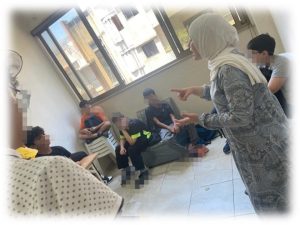
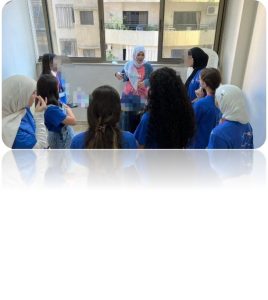
I am sharing with you some photos from the learning journey we undertook…
In Conclusion
The impact it left on me, surpasses all my previous scientific and training experiences. FIRSTedu-ADLX Framework transformed my perspective on the educational process, reorganized its methodology, and structured it in a way that truly enables meaningful influence and the achievement of deep, long-term educational goals. What struck me most was that I remained deeply affected not only during the journey but even afterwards; I found myself unconsciously applying FIRST domains principles in my daily interactions — even the way I explain my viewpoints to others has changed, as I now think systematically, inspired by FIRST. In my view, this experience is not an ending but a beginning — the beginning of more impactful and deep learning journeys.