Introduction
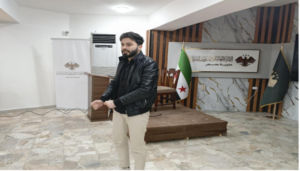
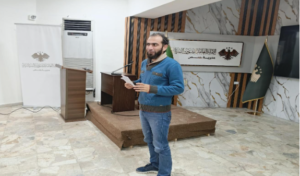
Essam Al Mshantaf is an English language facilitator from Homs, Syria. He is dedicated to empowering learners through meaningful, learner-centered experiences that spark confidence, curiosity, and real-life growth. Over the years, he has worked closely with adult learners from diverse backgrounds, focusing on developing essential life skills, communication abilities, and social awareness that support them both personally and professionally. His facilitation style is rooted in interaction, reflection, and practical application, grounded in the belief that learning becomes transformative when participants feel safe to express themselves, explore new ideas, and take risks without fear of judgment. Through storytelling, group challenges, and reflective dialogue, he creates spaces where every learner feels seen, valued, and capable of growth. His approach is guided by intentional observation of group dynamics, active listening to learners’ needs, and adaptive facilitation to ensure meaningful engagement. Facilitating through the FIRST-ADLX framework further shaped his practice, helping him design Learner eXperiences that honor learners’ voices and translate knowledge into real-world performance.
He shared with us a learning journey which addressed the need for stronger positive communication among adult learners, particularly in how they interact, express themselves, and respond to others in daily life. Many learners needed to develop awareness of how their words, tone, and listening behaviors affect relationships, which directly influenced their effectiveness in both personal and professional contexts.
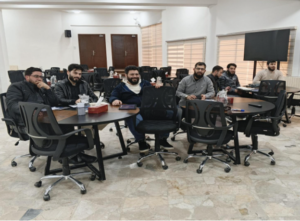
The participants were ten adult men between the ages of 30 and 35, bringing a rich blend of curiosity, life experience, and genuine enthusiasm for personal growth. Their roles as fathers, workers, and community members made the topic of positive communication highly relevant. They thrived in interactive environments where learning connected directly to real-life situations. Their natural energy, humor, and companionship created a warm and engaging atmosphere, while their openness and willingness to reflect allowed for authentic growth throughout the journey.
eXperience Design and Sequence of Activities
The FIRST-ADLX framework was chosen because it supports designing Learner eXperiences that go beyond content delivery toward real behavioral transformation. In this context, the framework allowed the facilitator to intentionally create a safe, engaging environment where learners could practice communication, reflect on their behaviors, and apply their learning in real-life situations. Its focus on interaction, reflection, and performance aligned perfectly with the goal of building positive communication habits.
Learning Outcomes
By the end of this learning journey, learners were able to:
Attitude Learning Outcomes:
- Demonstrate willingness to listen to others without interrupting
- Show patience and openness during conversations
- Develop a positive attitude toward teamwork and collaboration
- Show respect and patience during disagreement or misunderstanding
Skills Learning Outcomes:
- Demonstrate respectful communication in group settings
- Practice active listening and respond thoughtfully
- Express ideas clearly and confidently using appropriate tone and body language
- Apply strategies such as paraphrasing, eye contact, and clarifying questions
- Communicate respectfully in pairs and groups
Knowledge Learning Outcomes:
- Identify elements of positive communication such as clarity, empathy, respect, and tone
- Recognize the impact of tone, body language, and word choice
- List the components of effective communication and explain their importance
The learning journey was delivered through a sequence of learning activities including discussions, pair-based activities, and group tasks, supported by one main mission. The session followed a logical flow that moved from emotional connection to concept exploration, then to skill practice, followed by reflection and finally performance. The activities were designed to respect learners’ energy levels, encourage cooperative learning, and allow continuous interaction between participants. The experience was synchronous and on-site, with varied interaction patterns including individual reflection, pair work, and group collaboration, ensuring engagement and meaningful participation throughout.
One Learning Activity Using RAR Model
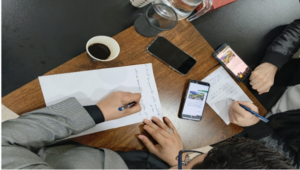
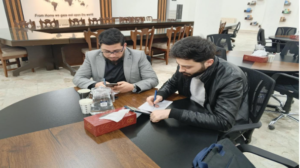
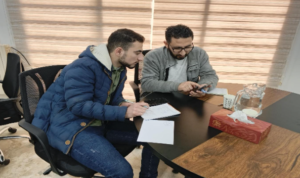
In the “Listen & Repeat” challenge and as a Readiness Increase Stage, participants were invited to recall moments when they felt misunderstood, which created an immediate emotional connection to the importance of listening and prepared them to engage deeply in the activity. They then worked in pairs (the Activity Facilitation Stage) where one participant shared a short personal story while the other repeated it in their own words, guided by prompts that encouraged them to focus on understanding, empathy, and tone rather than simple repetition. The interaction allowed participants to actively practice listening in a structured and supportive environment, while the facilitator guided the process through questions and observation. Following the activity facilitation, participants reflected on their experience (the Reviewing Actively Stage) by identifying what they had done, recognizing the challenges they faced such as interrupting or misunderstanding, and realizing how repeating and paraphrasing improved their comprehension. They then connected this insight to their real-life communication habits and considered how they could apply more mindful listening in future interactions with family, colleagues, and community members.
FIRST Domains in Action
F – Focusing on Learner Behaviors
The facilitator demonstrated strong attention to learner behaviors by observing how participants interacted from the beginning, identifying those who were hesitant, dominant, or silent. He personalized the experience by supporting individuals differently based on their needs, such as encouraging a hesitant learner who expressed fear of speaking. Trust was built by creating a safe space where all contributions were valued, and by consistently reinforcing positive behaviors. Participants were given opportunities to participate, express themselves, and take ownership of their communication practices.
I – Interacting within Positive Group Dynamics
A positive and socially engaging environment was created by organizing learners into small groups with rotating roles such as speaker, listener, and observer. This ensured balanced participation and encouraged cooperation. The facilitator fostered a positive spirit through encouragement, humor, and celebrating small successes. When conflict arose, such as disagreement between two learners, it was transformed into a learning opportunity through guided questioning, allowing participants to resolve the situation respectfully and collaboratively.
R – Reviewing Activities within RAR Model
In addition to the Readiness Increase Stage and the Activity Facilitation Stage, Reviewing Actively was embedded throughout the learning journey, particularly after the Activity Facilitation Stage where participants were guided to think about their experiences, reflect on them, extract meaning, and connect learning to real-life situations. Reviewing Actively deepened understanding by encouraging learners to recognize their own communication habits and consider practical improvements, making reflection an essential part of the Learner eXperience.
S – Sequencing within Learner eXperience
The learning journey followed a clear and intentional sequence that progressed from emotional engagement to conceptual understanding, then to practice, reflection, and performance. Activities were varied to maintain energy and attention, while key concepts were reinforced through repeated application in different contexts without causing boredom. The facilitator ensured smooth transitions and logical flow, helping learners stay engaged and build understanding progressively.
T – Transforming Learning into Performance
Learning was transformed into real performance through a final group challenge where participants applied positive communication skills to solve a problem collaboratively. The experience was strongly connected to real-life contexts, as learners related activities to their daily interactions. Evidence of transformation appeared in their behavior during the task and in their ability to apply skills outside the session. Follow-up impact was reflected in learners applying these skills in their homes and communities, showing continuity beyond the learning environment.
Conclusion
The impact on learners was clearly visible through their increased engagement, confidence, and respectful communication during and after the session. They became more aware of how their tone, body language, and word choice influence relationships, and demonstrated improved listening and expression skills. One learner shared that applying active listening at home led to a more positive interaction with his brother, reflecting real-life transfer of learning. These changes extended beyond the session, influencing interactions within families, schools, and the wider community.
For the facilitator, this experience reshaped his approach to facilitation by shifting focus from knowledge delivery to designing meaningful learner eXperiences centered on behavior change and performance. He became more intentional, observant, and responsive to learners’ needs, and more committed to creating opportunities for real application. The experience strengthened his confidence and reinforced his belief that when learning is designed with intention and empathy, it becomes impactful and transformative. Moving forward, he is committed to continuing to design experiences that empower learners to grow, connect, and apply their learning in meaningful ways.