About the Facilitator
Praise be to Allah, Lord of the Worlds. My name is Mohamed Essam Zaki Amin El-Gamal. I hold a General Diploma in Education from Al-Azhar University and a bachelor’s degree in Islamic Da’wah from Al-Azhar University. I work as a teacher of the Holy Qur’an and Islamic Sciences in private Al-Azhar institutes as well as international schools. I have also completed numerous learning journeys and training programs in the field of Islamic studies.
About the Learners
Many learners expressed attitudes such as:
- “Religion is not important.”
- “It is an optional subject that does not require much study or attention.”
Some learners felt bored during religious education classes and were mainly focused on finishing the school day.
They believed that:
- Society does not pay much attention to religion.
- The role of the religious mentor and educator is almost completely absent from their lives.
They frequently heard that:
- Religion is limited to the mosque.
- Since they are still young, they can do whatever they want now and become committed to religion when they grow older.
Challenges
The main challenges included:
- Limited lesson time.
- Learners’ desire to finish the school day, especially since the Islamic education session was scheduled at the end of the school day.
Learner Profile
- Age Group: 12–15 years old
- Gender: Male and Female
- Occupation: Ninth-grade students
- Country: Arab Republic of Egypt
- Number of Learners: 9
- Duration of the Journey: One session (45 minutes)
- Learning Context: Face-to-face learning session
Introduction to the Implementation Story
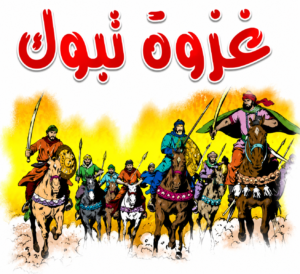
I applied the FIRST-ADLX Framework with ninth-grade students at my school through a learning session about the Battle of Tabuk. The session focused on connecting the events of the battle to learners’ daily lives and extracting the wisdom, lessons, and objectives that can be applied to reality.
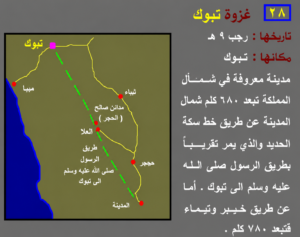
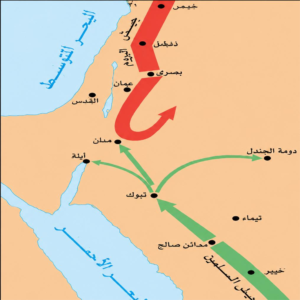
As we know, the Battle of Tabuk took place in the ninth year after the Hijrah between the Muslims and the Byzantine Empire. It is considered one of the significant battles in Islamic history and contains many educational and moral lessons that can be connected to contemporary life.
Learning Outcomes
Attitude Learning Outcomes
By the end of this journey, learners were expected to:
- Appreciate the value of patience and endurance in striving to uphold the word of Allah.
- Recognize how Allah rewards and compensates those who spend in His cause.
- Feel the regret experienced by those who fall short in fulfilling their duties toward Allah.
Skills Learning Outcomes
- Narrate the events of the Battle of Tabuk accurately.
- Identify the characteristics of the hypocrites as described in Surah At-Tawbah.
- Read the verses related to the Battle of Tabuk from Surah At-Tawbah.
Knowledge Learning Outcomes
- Identify the two sides involved in the Battle of Tabuk.
- Explain the wisdom behind the Prophet’s early announcement of the destination of the campaign.
- Describe the story of the three companions who stayed behind from the expedition.
Parallel Learning Outcomes
Attitude Outcome
- Appreciate the importance of honesty in daily life.
Skills Outcome
- Memorize selected verses from Surah At-Tawbah.
Knowledge Outcome
- Understand the ruling regarding abstaining from striving in the cause of Allah.
Performance Outcomes
- Retell the story of the Battle of Tabuk to their families.
- Apply the value of honesty in their daily lives.
Activity Sequence
The session began with an Opener Activity designed to increase learners’ readiness and prepare them to receive information, especially since Islamic education sessions are usually conducted at the end of the school day. Learners were invited to share thoughts and ideas that were currently on their minds.
Next, a Linking and Summarizing Activity was used to draw upon learners’ prior knowledge. Questions focused on ancient civilizations such as the Persians and Byzantines, their beliefs, the timing of the conquest of Makkah, and the difference between a battle (Ghazwah) and a military expedition (Sariyyah).
The session then moved to an instructional segment in which information about the Battle of Tabuk was presented. Learners were introduced to the circumstances faced by Muslims at that time and learned why the army was known as the “Army of Hardship.” They were then invited to infer the reason behind this title based on the conditions discussed.
After that, the session transitioned into an Energizer Activity involving role exchange. One learner read verses from Surah At-Tawbah describing the position of the hypocrites regarding participation in the battle and explained the meanings to peers according to his understanding. Another learner read verses describing the believers’ attitude toward the battle and explained them to the group. The remaining learners then created sticky-note comparisons highlighting the differences between the positions of the hypocrites and the believers.
Following this activity, additional information about the events of the Battle of Tabuk and Allah’s support for His Prophet was presented.
Learners then participated in a discovery activity. One learner selected two prepared papers: one containing a question and the other containing the name of another learner. The selected learner answered the question posed by their peer.
Afterward, all learners closed their eyes and engaged in a breathing exercise involving inhalation and exhalation to promote relaxation and focus.
The session concluded with an engaging storytelling activity about the three companions who remained behind during the Battle of Tabuk. As a follow-up task, learners were asked to memorize the verses related to the story of the three companions who were left behind.
Applying the FIRST-ADLX Framework Domains
Focusing on Learner Behaviors
This domain was activated by beginning the session with questions about what was on each learner’s mind and by showing genuine concern for their well-being and personal challenges. Maintaining eye contact and addressing each learner by name increased their attention and helped them feel valued and important within the learning environment.
Interacting within Positive Group Dynamics
This domain was implemented through the sticky-note activity comparing the attitudes of believers and hypocrites toward participating in the Battle of Tabuk. Learners were divided into groups and engaged in a Think–Pair–Share process. Positive interaction was also encouraged through the question-and-answer activity, where all learners participated actively in asking and answering questions.
Reviewing Activities Using the RAR Model
The RAR model was applied through the activity comparing the attitudes of believers and hypocrites toward joining the Battle of Tabuk.
During the Readiness Increase stage, learners received clear instructions about the activity, necessary materials such as pens and sticky notes were prepared, and motivation was increased by encouraging learners to generate as many comparisons as possible.
During the Activity Facilitation stage, the activity was implemented using active learning strategies including cooperative learning, role play, dialogue, and discussion. Throughout the activity, the facilitator monitored learners and provided support whenever needed.
During the Reviewing Actively stage, questions were asked about the conclusions learners reached, and learners were invited to express their feelings and reflections regarding the attitudes of both the believers and the hypocrites.
Sequencing within the Learner eXperience
The session included a sequence of varied activities that flowed logically and progressively. It began with an opener focused on learners’ thoughts and feelings, followed by a linking and summarizing activity that activated prior knowledge. An instructional activity then introduced information about the Battle of Tabuk, followed by an energizer activity comparing the attitudes of believers and hypocrites. Additional content about the battle was then presented, followed by the discovery activity, the breathing exercise for relaxation, and finally the storytelling closure activity and memorization task.
Transforming Learning into Real Performance
Learning was connected to real-life situations by highlighting the impact of honesty on the lives of the three companions who stayed behind and the consequences of dishonesty among the hypocrites. Learners were encouraged to practice honesty consistently in their daily lives.
The session also emphasized the importance of planning by examining how the Prophet ﷺ prepared for the Battle of Tabuk. In addition, learners explored how decisions and strategies may vary according to circumstances and contexts, as demonstrated by the Prophet’s approach during this expedition.
Impact of Applying the FIRST-ADLX Framework
Impact on the Facilitator
Applying the FIRST-ADLX Framework helped make the session more engaging and less monotonous, which motivated me to continue improving my facilitation practices. It also encouraged me to reconsider the importance of focusing on learners and selecting methods that suit their needs and characteristics.
Impact on the Learners
Learners became noticeably more active and engaged than they had been previously. I was informed that some learners began seeking opportunities to spend time with me during their free periods. The learning session became more enjoyable for them, leading to greater participation and deeper learning.
Impact on the School or Community
At this stage, no significant impact has yet been observed within the school or wider community because the learning environment still operates largely within traditional structures. However, this is an area we hope to influence positively in the future.
Closing Remarks
In conclusion, I would like to extend my sincere gratitude and appreciation to everyone involved in this valuable work. I ask Allah to reward them abundantly for their efforts in developing educational and facilitation practices.
With gratitude,
Mohamed Essam Zaki Amin El-Gamal