Introduction
About the Facilitator
Ms. Baraa Abbas Amer is a Qur’an and Islamic studies teacher from Egypt, specifically from Menoufia Governorate, Ashmoun Center, Sakiat Al-Manqadi village. She graduated from Al-Azhar University, Faculty of Education, with an Excellent grade with honors in 2020.
She has participated in several learning journeys related to teaching the Qur’an, including Noor Al-Bayan and Al-Tahfeez Al-Saeed programs. She is also a graduate of the Al-Binaa Al-Manhaji Program – Al-Azm Cohort, and serves as an ambassador for the Osboha Readers Platform.
Ms. Baraa works in teaching the Qur’an and its sciences to children. In her work, she focuses on combining accurate Qur’anic recitation, understanding meanings, and building values within the learner’s character. She became familiar with the FIRST framework as part of her professional development in designing and facilitating learner eXperiences, and she sought to apply it in Qur’an learning circles to make learning deeper and more impactful.
The Challenge
One of the challenges the facilitator observed in Qur’an learning circles is that many children focus mainly on memorization and recitation, without reaching the stage of reflecting on meanings or feeling the value-based impact of the verses.
In addition, the diversity of learner personalities — including high achievers, shy learners, stubborn learners, and others — requires varied facilitation approaches so that each learner feels actively engaged and influential within the learning circle.
Therefore, the facilitator designed a learner eXperience centered on reflecting on Surah ‘Abasa and understanding the reason for its revelation, while also strengthening the learners’ recitation skills. She utilized the domains of the FIRST framework to enhance learner interaction and achieve emotional, cognitive, and behavioral impact.
Learner Context
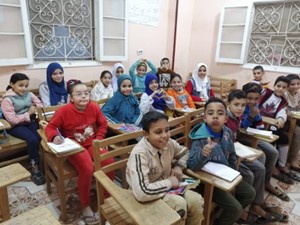
This learning journey involved 18 learners, boys and girls, aged 6 to 10 years old.
Learners displayed a variety of personalities, including confident learners, shy learners, and others, which required careful consideration of individual differences during facilitation.
The learner eXperience took place in a Qur’an learning circle in Sakiat Al-Manqadi village in Menoufia Governorate, Egypt.
Designing the Learner eXperience and Sequence of Activities
Why the FIRST Framework?
The facilitator chose to apply the FIRST framework because it focuses on building an Active Deep Learner eXperience, rather than simply transferring knowledge.
The framework also supports attention to learner behaviors and interaction, organizes activities in a progressive and connected way, and emphasizes reflection and active reviewing, which deepen the impact of learning.
Learning Outcomes
By the end of this journey, learners will be able to:
Attitude Outcomes
• Appreciate the greatness of the Book of Allah.
• Show interest in learning more about the reasons behind Qur’anic revelation.
• Avoid actions that may harm others.
• Appreciate the efforts of Prophet Muhammad ﷺ in conveying the message.
Skills Outcomes
• Recite Surah ‘Abasa correctly.
Knowledge Outcomes
• Identify the reason for the revelation of Surah ‘Abasa.
• Recognize some Islamic values reflected in the story.
Parallel Outcomes
• Mention the actions that invalidate prayer.
• Appreciate the value of optimism.
• Demonstrate self-learning skills.
Performance Outcomes
• Recite Surah ‘Abasa from the Qur’an correctly with reflection and presence of heart.
Sequence of Activities in the Learner eXperience
The learning circle began with the Islamic greeting and asking learners about their well-being. The facilitator then introduced an opener activity called “Word and Surah Game.”
In this activity, the facilitator mentioned words that appear in different Qur’anic surahs such as ‘As‘asa, Misk, Ruwaydan, Al-Turath, Ababil, and learners identified the surah in which each word appears. Material and moral encouragement were used to motivate participation.
After that, the facilitator recited the beginning of Surah ‘Abasa from verse 1 to verse 10 twice. She then recited the verses again while the learners repeated after her. The learners were then divided into two groups: one group recited while the other listened.
Next, the “Sheikh of the Circle” activity was implemented, where learners selected a student with a beautiful voice and good recitation skills to recite the verses while the rest of the learners repeated after him.
The facilitator then moved to a Linking and Summarizing activity using “Say and Complete” questions to review learners’ memorization of previous surahs.
Afterward, she asked the learners:
“Who among you knows about whom this surah was revealed?”
She listened to their responses and drew out what they already knew about the surah, encouraging and reinforcing their answers.
The facilitator then presented the reason for the revelation of Surah ‘Abasa and the story of the Prophet’s interaction with the noble companion Abdullah ibn Umm Maktum.
Learners were then divided into groups and asked to use paper and pens to write what they learned and benefited from the story within a few minutes. They later shared their reflections in the circle while the facilitator followed their work closely and addressed each learner with a name reflecting a positive trait in their personality.
After the activity, the facilitator asked reflective questions such as:
• What will each learner apply?
• With whom will they apply it?
• What did this activity add to them?
Later in the session, the facilitator conducted an energizer activity by writing the word Constantinople on the board and asking learners to extract smaller words from it.
At the end of the session, learners agreed on a practical task to apply outside the learning circle: reciting the following supplication ten times after Fajr and Maghrib prayers:
“There is no god but Allah alone, with no partner. To Him belongs the dominion and praise. He gives life and causes death, and He has power over everything.”
A Learning Activity Using the RAR Model
The facilitator applied the RAR model in several learning activities, including the activity where learners wrote what they learned from the story of Abdullah ibn Umm Maktum.
During the Readiness Increase stage, the facilitator divided learners into groups, provided papers and pens, and encouraged them to reflect on what they had learned from the story. She also created a safe environment that allowed them to express their ideas and share them confidently.
During the Activity Facilitation stage, the facilitator followed up with the groups, listened to their ideas, and encouraged their participation while monitoring time and ensuring that every learner had an opportunity to contribute.
During the Reviewing Actively stage, learners were invited to reflect on their written ideas through questions such as:
• What did you learn from this activity?
• What will you apply?
• With whom will you apply it?
These questions helped learners transform their insights into practical steps they could apply in their daily lives.
FIRST Framework Domains in the Learner eXperience:
F – Focusing on the Learner
The facilitator listened carefully to learners’ prior knowledge about the reason for the revelation of the surah and built on their responses. She addressed each learner using a name that reflected a positive trait in their personality, such as thinker, creative, or leader. She also allowed some learners to take facilitation roles during certain activities and ensured balanced eye contact and engagement with all learners.
I – Interacting within Positive Group Dynamics
The facilitator worked to create a positive social atmosphere in the learning circle through group work and open dialogue among learners. She also diversified encouragement methods, combining both material and moral motivation to strengthen participation and enthusiasm.
R – Reviewing Activities within the RAR Model
The stages of the RAR model were applied throughout several activities, particularly the activity where learners wrote reflections on the story. Learners were prepared for the activity, supported during the facilitation stage, and then guided through active reviewing using reflective questions that helped them consider how they could apply what they had learned.
S – Sequencing within the Learner eXperience
Activities were organized in a progressive sequence that began with an opener activity to increase learners’ readiness, followed by reciting and repeating the verses using the Al-Tahfeez Al-Saeed method. Interaction and recall activities followed, such as the Sheikh of the Circle activity and the Say and Complete activity. This was followed by a reflective writing activity about the story of Ibn Umm Maktum, then an energizer activity involving extracting words from the word Constantinople, and finally a practical task to be applied outside the circle.
T- Transforming Learning into Real Performance
This domain appeared through connecting the story of Ibn Umm Maktum to the learners’ real lives, asking them to write what they learned from the story, and inviting them to reflect on what they would apply and with whom they would apply it. This transformation was further reinforced through the practical task learners committed to after prayer.
Conclusion
Impact on the Facilitator
Applying the FIRST framework influenced the facilitator’s approach to designing learning journeys. She became more focused on drawing ideas from learners (pull) and giving them opportunities to express their thinking, while reducing push except when necessary.
She also realized the importance of active reviewing after activities, and that the success of an activity depends greatly on increasing learners’ readiness.
She also concluded that learning does not occur merely through experiencing the activity itself, but through reflecting on the experience. In addition, she observed that children are highly influenced by the facilitator’s actions and words.
Impact on the Learners
Learners showed high levels of enthusiasm during the learning circle and appeared joyful and engaged without signs of boredom.
They also felt that each of them had unique value and identity within the circle, and the environment encouraged them to share their thoughts safely.
Some learners also mentioned that their recitation of the Qur’an had changed, as they began reflecting more deeply on the verses and experiencing the beauty of recitation. They shared that every session leaves them with something new that affects them internally.
Impact on the Family or Community
One parent shared with the facilitator a clear change in her daughter Malak, who became more committed to performing prayers on time. Her memorization, recitation, and understanding of meanings also improved.
The mother also mentioned that her daughter began saying that when she grows up, she would like to become like her teacher, Ms. Baraa.
The family also noticed improvements in her character and academic performance, emphasizing that the facilitator’s presence in the learning circle had made a significant difference in her learning.